What’s the difference between tartar vs. plaque?
Plaque and tartar are closely linked, but they’re not the same. Plaque is a soft deposit that can be removed through regular brushing and flossing. Calculus, however, is a hardened buildup that is attached to your teeth’s surface. As a result, it can’t be taken removed at home and needs to be professionally removed at a dental surgery.
“Dental plaque is a sticky biofilm, composed of bacteria, food particles and saliva that accumulates on and between the teeth,” says Dr Ian Hedley, Principal Dentist at Sydney’s Mosman Dental Surgery.
“Tartar is dental plaque that has hardened through a process called calcification, during which minerals such as calcium and phosphate are deposited within the plaque.”
Plaque is usually colourless, so you might not notice it on your teeth at first. One giveaway is how your teeth feel when you haven’t brushed them. If you run your tongue over them and they feel slightly rough or fuzzy, that’s often plaque covering your teeth.
Plaque can lead to tooth decay as the bacteria in plaque produce acids that attack your tooth enamel, the hard outer layer that protects the teeth.
“Dental plaque is soft and can usually be removed with effective brushing and flossing. In contrast, calculus is hard and firmly attached to the tooth surface, meaning it cannot be removed at home and requires professional removal by a dentist or dental hygienist using specialised instruments,” says Dr Hedley.
What can plaque and tartar do to your teeth and gums?
One in three Australian adults over 15 has untreated tooth decay, often caused by plaque.15 Symptoms of tooth decay include toothache, sensitivity, staining on the tooth’s surface and red, swollen gums.
Untreated tartar can lead to gum disease. Two of the most common forms of gum disease are Gingivitis, which is an inflammation that can cause red, swollen and bleeding gums, and Periodontitis which is a more severe form and can cause teeth to loosen and gums to recess.
Do plaque and tartar cause bad breath?
Yes, that can be the case. Bad breath, or halitosis, can be caused by a build up of plaque and tartar in your mouth, causing gum disease. Bacteria can release an unpleasant-smelling sulfur compound as they digest the proteins in your mouth.
Can I remove plaque at home?
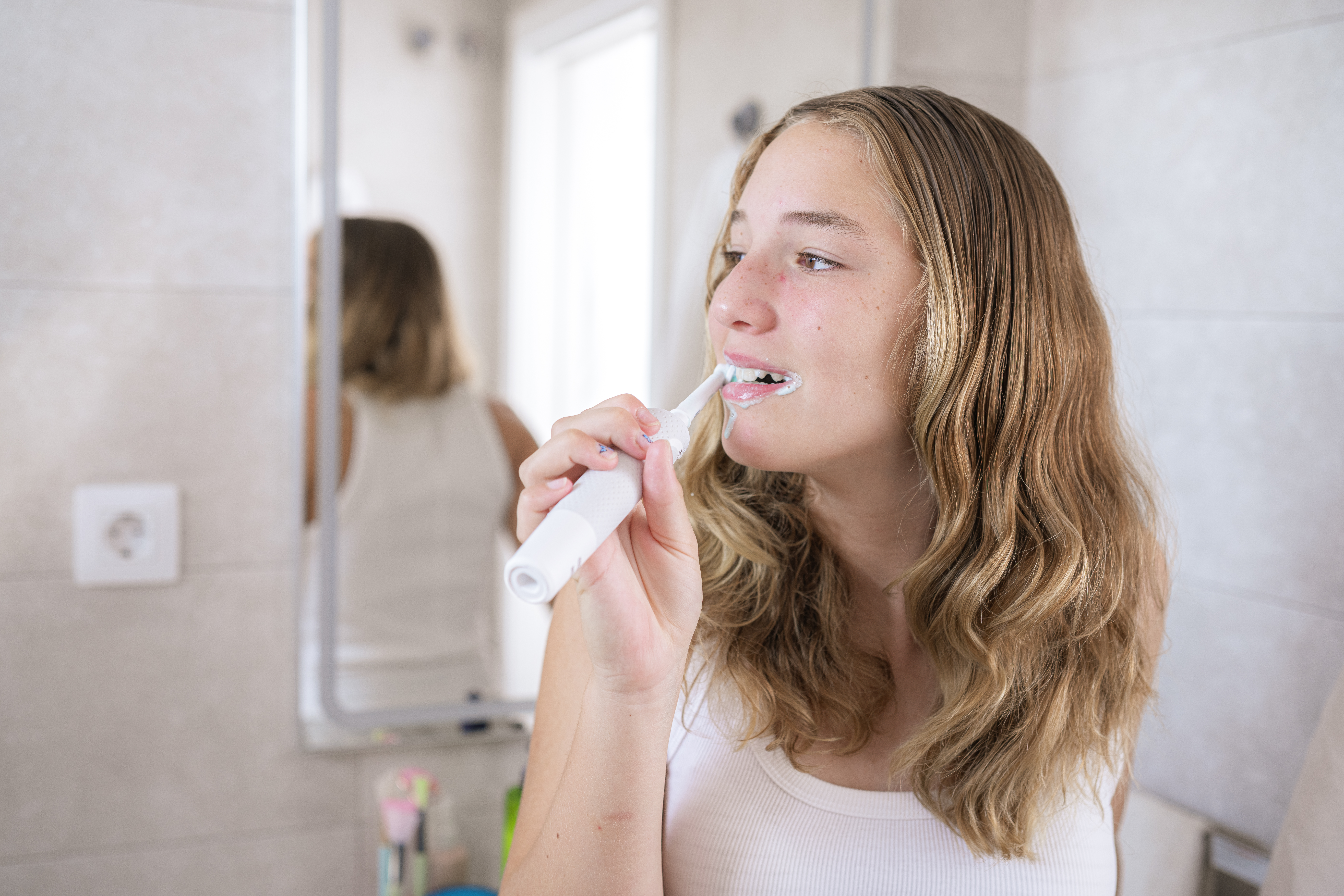
With consistent brushing and flossing you can reduce plaque on your teeth. Brush your teeth twice a day (in the morning and at night before you go to bed) with a soft-bristled brush or electric toothbrush using a pea-sized amount of fluoride toothpaste.
Brush gently in circular motions, starting at one side of your mouth and going all the way to the other, making sure you cover all surfaces. Then, brush on the inside surface of every tooth, from the top to the gum. Make sure you cover all surfaces.
How do I floss my teeth?
To floss your teeth, use around 30cm to 45cm of floss, and wrap the ends around your middle and ring fingers for better control.
Use a 3cm to 5cm working section of taut floss and slide it gently between your teeth.
“Dental floss should be used carefully in an up-and-down motion not back-and-forth, so as not to traumatise or lacerate the gingival tissue [gum],” says Dr Hedley.
“If you notice bleeding… this could be a sign of inflammation or early periodontal disease. You should always consult your dentist should you have any concerns.”
One good tip? Make sure you floss before brushing, as it loosens plaque and food debris first, so your toothbrush can sweep it away more effectively.
READ MORE: How to floss your teeth
Can I remove tartar from teeth without a dentist?
In short, no, you can’t remove tartar safely at home, as once it’s hardened on the teeth, it needs to be removed by a professional dentist.
Cleaning your teeth regularly is a good strategy, as is getting regular professional dental checks.

Looking for cover with more bite?
Explore our range of Medibank Extras including dental, from routine check-ups to major treatments.
How does a dentist remove tartar?
A dentist, or a dental hygienist, removes tartar with professional cleaning tools and often uses a process called scaling.
This may involve hand instruments or an ultrasonic scaler that uses vibration and water to loosen hardened build-up from the teeth and gumline. Your teeth may then be polished to smooth the surface and remove remaining surface stains.
How can you prevent plaque turning into tartar?
Brushing twice a day and flossing once a day are vital, along with avoiding sugary snacks or drinks.
“If you smoke, quitting is one of the best things you can do to oral health, with smoking closely linked to gum disease, tooth stains and slower healing,” says Dr Hedley.
When should you see a dentist?
Having a regular dental check-up every six to 12 months is also recommended.
If it’s been a long time between dental check-ups it’s a good idea to visit a dentist and talk about a plan for how often you need a clean, as it can vary from person to person.
READ MORE: How often should you get your teeth cleaned?
Frequently asked questions
Can I remove tartar without a dentist?
No. Once plaque hardens into tartar (or calculus), it can’t be removed by brushing or flossing at home. A dentist or a dental hygienist can remove it using professional cleaning tools.
Can I remove plaque at home?
Dental plaque is soft and sticky, so daily brushing and cleaning between your teeth can help remove it before it hardens. Once it’s hardened, it becomes tartar, and that should be removed by a dentist. To remove plaque, brush twice a day with fluoride toothpaste and clean between your teeth once a day with floss to remove plaque from your teeth.
What happens if tartar is left on teeth?
Tartar can build up around the teeth and gumline and if it’s left untreated, it may contribute to gum irritation, gingivitis, gum disease, tooth decay and bad breath.
Is it safe to scrape tartar off your teeth at home?
No, scraping tartar off your own teeth at home is not recommended it should only be removed by a professional dentist
How do I stop plaque becoming tartar?
Brush your teeth twice a day with fluoride toothpaste, floss regularly, limit sugary foods and drinks, and see a dentist regularly for check-ups and professional cleans. Removing plaque early helps stop it hardening into tartar.