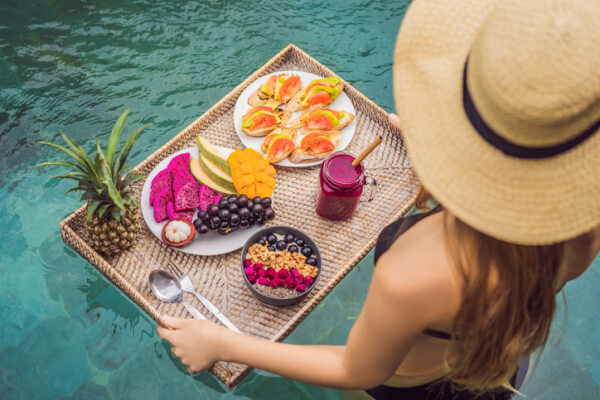
Travel can disrupt even the most well-intentioned food habits, making it easy to indulge in tempting treats. Different time zones, long flights, restaurant food and limited menu options can make it more challenging to choose healthy meals when you’re not at home.
Planning ahead, choosing nutritious travel snacks and being flexible with food choices are just some of the ways to stay healthy on holiday. Additionally, eating a wide variety of colourful fruits and veggies. Stay hydrated with water in hot climates and drink alcohol responsibly so you can enjoy your travels without compromising your wellbeing.
What are the basics of healthy eating?
According to the Australian Government, the essential nutrients you need include carbohydrates, protein, fats, dietary fibre, water, vitamins, and minerals.
Exact daily requirements vary depending on your age, life stage (if you’re pregnant, for example), and activity level.
The Australian Dietary Guidelines1 recommend eating a variety of foods from five core food groups to support energy, wellbeing and overall health. They are:
- Vegetables
- Fruit
- Grains and cereals
- Lean protein (meat, fish and alternatives like eggs and tofu)
- Dairy, like milk yoghurt and cheese.
“To help get the nutrients you need, aim to include a source of fruit or vegetable, a wholegrain, and a source of protein (meat, fish, eggs, dairy, legumes) at every meal,” says Advanced Accredited Practising Dietitian Adrienne Forsyth, an Associate Professor and Research Lead in Nutrition & Dietetics at Australian Catholic University. “Use fruit and vegetables for snacks too.”
How to eat healthy on holiday without missing out
Enjoying local treats and meals is a big part of travelling, but aim for a balanced approach by incorporating fruits and vegetables into your diet as often as possible. You might decide to give yourself the option of one indulgent meal a day – so if you eat a rich meal or snack, balance it out with lighter choices later in the day.
“You can make a list of foods you want to try while you are there and have fun trying to tick everything off your list,” says Associate Professor Forsyth.
What are the healthiest ways to eat out while travelling?
Pack healthy snacks. Having healthy snacks on hand is convenient, and can fuel your body while you’re on the go. “When we are over-hungry, it can be hard to make good decisions about where and what to eat,” Associate Professor Forsyth says. “Having snacks on hand to keep hunger at bay can help to manage our mood, concentration, and energy to get through to the next meal.”
If you’re eating on-the-go at bakeries, service stations or convenience stores, try to go for salad options, wholegrain breads or wraps over classic takeaway food like pies and sausage rolls.
Associate Professor Forsyth advises how much and how often to snack should also vary based on what you are doing: “Snack more if you’re doing a walking tour of a foreign city and less if you’re sitting in conference presentations all day.”

Health members save 15% all year round.
Ready for your next adventure? Help protect your trip with award-winning Medibank Travel Insurance. Plus, if you're a Medibank health member, you can save 15%.
Important things you should know: Limits, sub-limits, exclusions and conditions apply. This is general advice only. Medibank Private Limited, ABN 47 080 890 259, an Authorised Representative, AR 286089, of Travel Insurance Partners Pty Limited, ABN 73 144 049 230 AFSL 360138 arranges the insurance on behalf of the insurer. The insurer is Zurich Australian Insurance Limited ABN 13 000 296 640, AFSL 232507. Please consider your own needs and the Combined FSG/PDS to decide if this product is right for you. For information on the Target Market and Target Market Determinations, visit medibank.com.au/travel-insurance/help/
What are the best ways to avoid unhealthy food on flights and road trips?
Associate Professor Forsyth recommends these snack options:
Healthy snacks for a flight
“Pre-portioned nuts and dried fruit are great sources of fibre and nutrients in small, lightweight packages,” she says. “If [you’re] wanting to take something fresh, fruits like grapes and berries are waste-free options with no peeling required. Sandwiches with nut spreads on wholegrain bread are an easy lightweight option that keep well.”
Healthy snacks for travelling in a car
“For short road trips, sandwiches, nuts, and fresh fruit are great,” Associate Professor Forsyth advises. “Fruit like apples, oranges, and bananas will keep for a few days without needing refrigeration. Having a cooler bag or esky with an ice pack means you can take yoghurt and cheese too.”
What are the healthiest ways to eat out while travelling?
Healthy breakfasts while travelling
“Cooked options are often going to provide you with the most nutrition, though some choices like sausage rolls and pastries can be high in saturated fat. Look for lean meats, poached eggs, and cooked vegetables. Add some fresh fruit and choose wholegrain toast or rolls instead of muffins and danishes. Baked beans are a great source of protein and fibre to start the day,” says Associate Professor Forsyth.
Healthy meals while eating out
As per the Australian Dietary Guidelines,1 prioritise fruit, vegetables and a source of protein like fish, meat, or legumes. “Instead of a starter, order a side of salad or vegetables with your main meal,” Associate Professor Forsyth says. “Consider sharing dessert or ordering it only occasionally. If you are based in one location, look for different restaurants to try. Eating a range of cuisines will provide more varied nutrients and also help to keep food interesting.”
Research dining options in advance
Finding food to eat when travelling can be challenging in an unfamiliar area. Associate Professor Forsyth advises doing some research about the local restaurants and markets before your trip and making a shortlist for when you arrive. “If you’re less excited about the local food, take some time to find options that you think you’ll be okay with so you have some go-to options when ordering or are prepared to ask for modifications,” she says.
Be mindful of alcohol consumption
Although it might be tempting to drink more alcohol on holiday, the national recommended limit2 is no more than four standard drinks per day.
According to Eat for Health alcohol “is high in kilojoules, is nutrient poor and can lead to weight gain.”3
Stay hydrated
Water is an essential part of a healthy balanced diet and helps the body digest food and absorb nutrients. As a result, Associate Professor Forsyth says it’s important to carry water with you while you’re travelling. “Clean, fresh, affordable drinking water can be surprisingly difficult to find,” she says. “If you have the capacity to carry tap water from home (i.e. car travel), do so.
“If you’re abroad, purchase bottled water early in the day or fill up bottles at the hotel if the drinking water is safe, and carry that through the day with you.” If you’re travelling internationally, you can check here to see if the tap water is safe to drink.
Frequently Asked Questions
How do I avoid over-eating while on holiday?
Plan ahead where possible. You can make a plan for your day when you wake up and then pack healthy snacks and choose meals with protein, fibre and vegetables to help maintain energy levels while travelling.
What takeaway food is the healthiest?
As a rule it’s a good idea to go for bread-based options which include hamburgers, wraps, souvlaki, kebabs and sandwiches, and try to avoid deep-fried foods or pastry based options.
Is it safe to drink tap water overseas?
Never assume it is. Healthdirect4 advises checking whether tap water is safe to drink at your destination before you go. It also points travellers to Smartraveller13 for destination-specific food and water safety advice.
What if I get diarrhoea while I am travelling?
Prevention is always better than cure, so It’s important to maintain good personal hygiene while you’re away. Washing your hands with soap and water after you’ve been to the toilet or eating is advised. If you get traveller’s diarrhoea, treatment usually focuses on easing symptoms and preventing dehydration, which may mean drinking plenty of water or using oral rehydration drinks to replace lost salts and minerals.
Depending on the cause and severity, treatment may also include antibiotics or anti-nausea medication, while limiting dairy, alcohol and spicy foods, and avoiding anti-diarrhoea medicines if you have a high fever.
What should I know about food safety while travelling?
Food safety matters, especially if you’re eating from buffets, markets or taking leftovers back to your accommodation, according to Healthdirect.4 They say contaminated food and water can cause infections such as gastroenteritis, hepatitis A, cholera and typhoid.
Food Standards Australia New Zealand also advises keeping perishable food refrigerated at 5°C or colder and throwing it out if it has been at room temperature for more than four hours.


