Most of us don’t give much thought to how we brush our teeth, but the way we do it can matter far more than you might realise. How often you brush, the technique you use, and even the type of toothbrush you choose can all play a major role in helping to keep your mouth healthy.
Brushing isn’t just a routine, it’s an important part of protecting your teeth and gums from the plaque that builds up on the surface of your teeth and along your gumline. Plaque is the reason we brush our teeth because if it isn’t removed, it can contribute to cavities, tooth decay and gum disease.
Here, Dr Ian Hedley, Principal Dentist at Sydney’s Mosman Dental Surgery, breaks down the steps to ensure your brushing technique is protecting your teeth and gums. This includes choosing a soft‑bristled toothbrush paired with fluoride toothpaste, brushing twice a day for around two minutes, and taking the time to clean every surface of each tooth so nothing is missed.
Why does brushing your teeth properly matter?
Brushing removes plaque from tooth surfaces
“Throughout the day, when we’re eating, soft plaque accumulates and this is really a mix of bacteria and saliva,” says Dr Hedley.
Plaque can contribute to tooth decay and gum disease
“If you don’t brush that soft plaque away, that will either calcify and harden and become calculus (or tartar), and/or it will produce acids, which will cause tooth decay,” he adds.
Good brushing supports fresh breath, gum health and long-term oral health
“The reason for brushing and any hygiene aid is to disrupt and remove that soft plaque before it causes problems," says Dr Hedley.
Brushing technique matters because rushing or missing areas can leave plaque behind
“Essentially, you’re trying to keep the mouth as clean as possible,” he says.
READ MORE: How to keep your teeth healthy long term
How often should you brush your teeth?
Dr Hedley advises that we should ideally brush twice a day, morning and night. “Some people prefer before breakfast, while others prefer after breakfast, but it doesn’t really matter,” says Dr Hedley. “I prefer before breakfast, just because my mouth feels fresher,” he explains.
If you do brush your teeth after breakfast, it’s advised to wait 30 minutes after you’ve finished eating.
“The most important brush is last thing at night, before bed,” he says. “So, don’t brush and then go and have another drink or something to eat and then go to bed.”
When should you avoid brushing?
Wait at least 30 minutes after eating, vomiting or drinking something acidic, like orange juice, because the acid can cause the enamel to temporarily soften. “You should let the saliva in the mouth buffer the pH first before brushing,” Dr Hedley says.
Brush, don’t scrub
“We should brush the teeth as opposed to scrubbing the teeth,” Dr Hedley says. “A lot of people think if they scrub harder, they’re doing a better job. But actually they can be doing more damage to the teeth and the soft tissue.” That damage can include causing your gums to recede and damaging the enamel on the surface of your teeth.
Don’t brush too often
“You can cause recession of the soft tissue [gum], which is often [also] linked to brushing too hard,” says Dr Hedley. “You can even brush away the protective enamel shell of a tooth over a long period of time.”
READ MORE: Can you brush your teeth too much?
How long should you brush your teeth for?
When it comes to how long you should spend brushing your teeth, Dr Hedley’s advice is two minutes, and he suggests brushing the mouth in four sections – top left, top right, bottom left and bottom right.
“We usually divide the mouth into a quadrant,” he says. “And then you do each quadrant for about 30 seconds each.” You should ensure that you brush on the outside and inside surface of every tooth and go all the way down to the gum.
How to brush your teeth properly, step by step
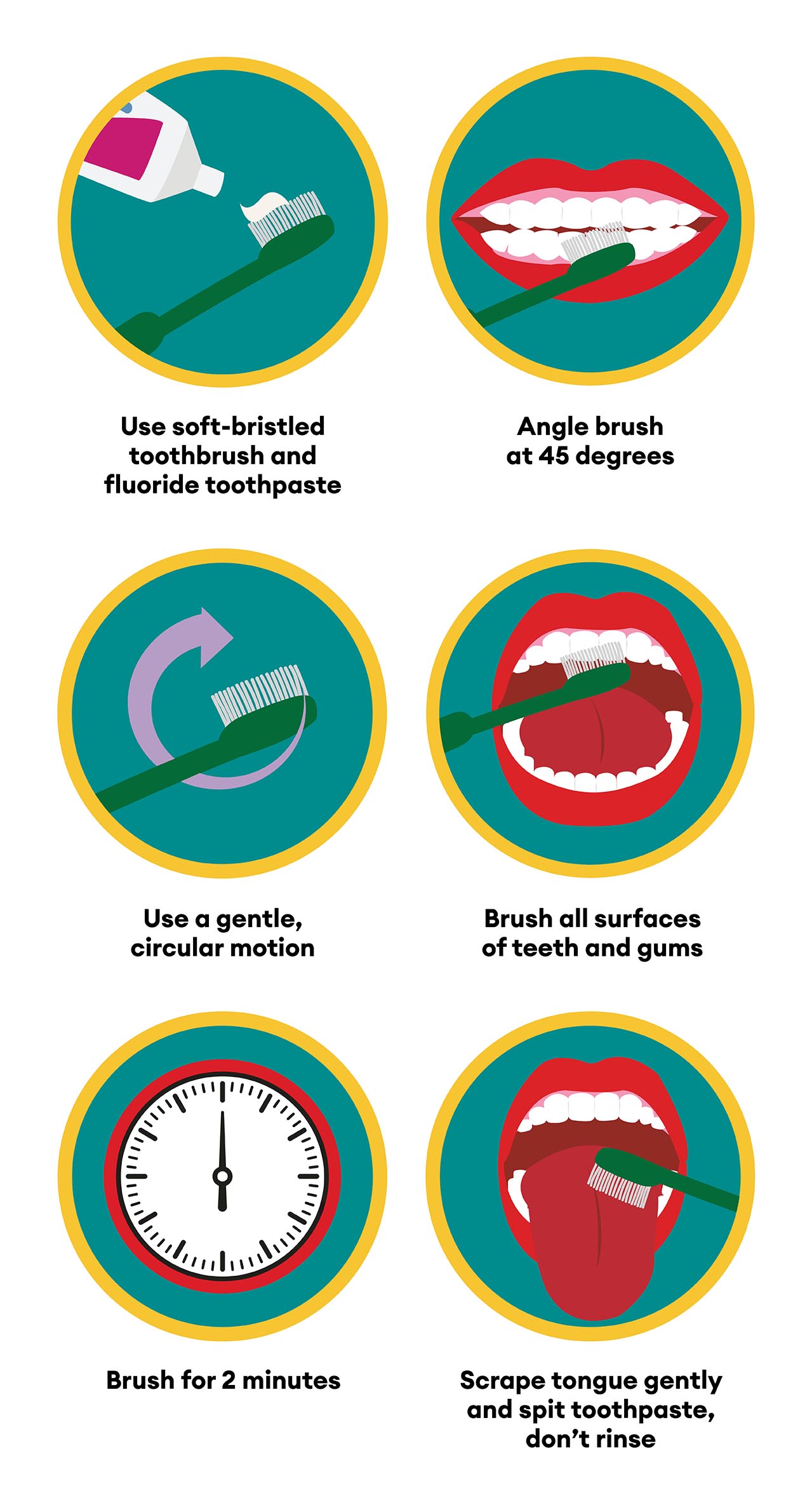
Dr Hedley suggests following these steps to brush your teeth properly if you’re using a manual brush.
1. Get your toothbrush ready
Take a toothbrush with soft bristles and a small-sized head. Then apply your fluoride toothpaste to your toothbrush. “Just a pea-sized amount,” says Dr Hedley.
2. Angle your brush
Place the toothbrush against your teeth at a 45-degree angle, pointing gently towards the gumline and use a small circular motion. “You’re aiming the bristles of the toothbrush at the margin of the pink gum tissue and the tooth, and use gentle circular brushing in order to try and dislodge the plaque that’s built up on the teeth,” Dr Hedley says.
3. Brush the outside, inside and chewing surfaces
Use small, gentle strokes to clean the outer surfaces, inner surfaces and chewing surfaces of your teeth. “It’s very light pressure – [the same as if you were] holding a grape between your thumb and your index finger and you try not to squish it,” Dr Hedley recommends.
4. Brush your tongue
Gently brush your tongue from back to front to help remove bacteria and keep your breath fresh. “That white coating you get on the tongue first thing in the morning, is bacteria that’s built up overnight,” Dr Hedley says. “So tongue scraping first thing in the morning is a pretty good way to reduce that bacterial load.”
5. Spit, don’t rinse
Spit out the excess toothpaste when you’re finished, but avoid rinsing straight away, as this can wash away the fluoride that helps protect your tooth enamel. “If you then rinse after you’ve brushed, you’re washing away the benefits of the paste,” he explains.
Should you use an electric toothbrush?
“You don’t need to, but I would recommend it for most people, as it’s probably more effective,” says Dr Hedley. Every dentist will have their own opinion, so it’s worth asking what your dentist recommends for your specific needs. An electric toothbrush has a rotating head so it’s useful for people with braces and those who have trouble using their hands.
READ MORE: Are electric toothbrushes better?
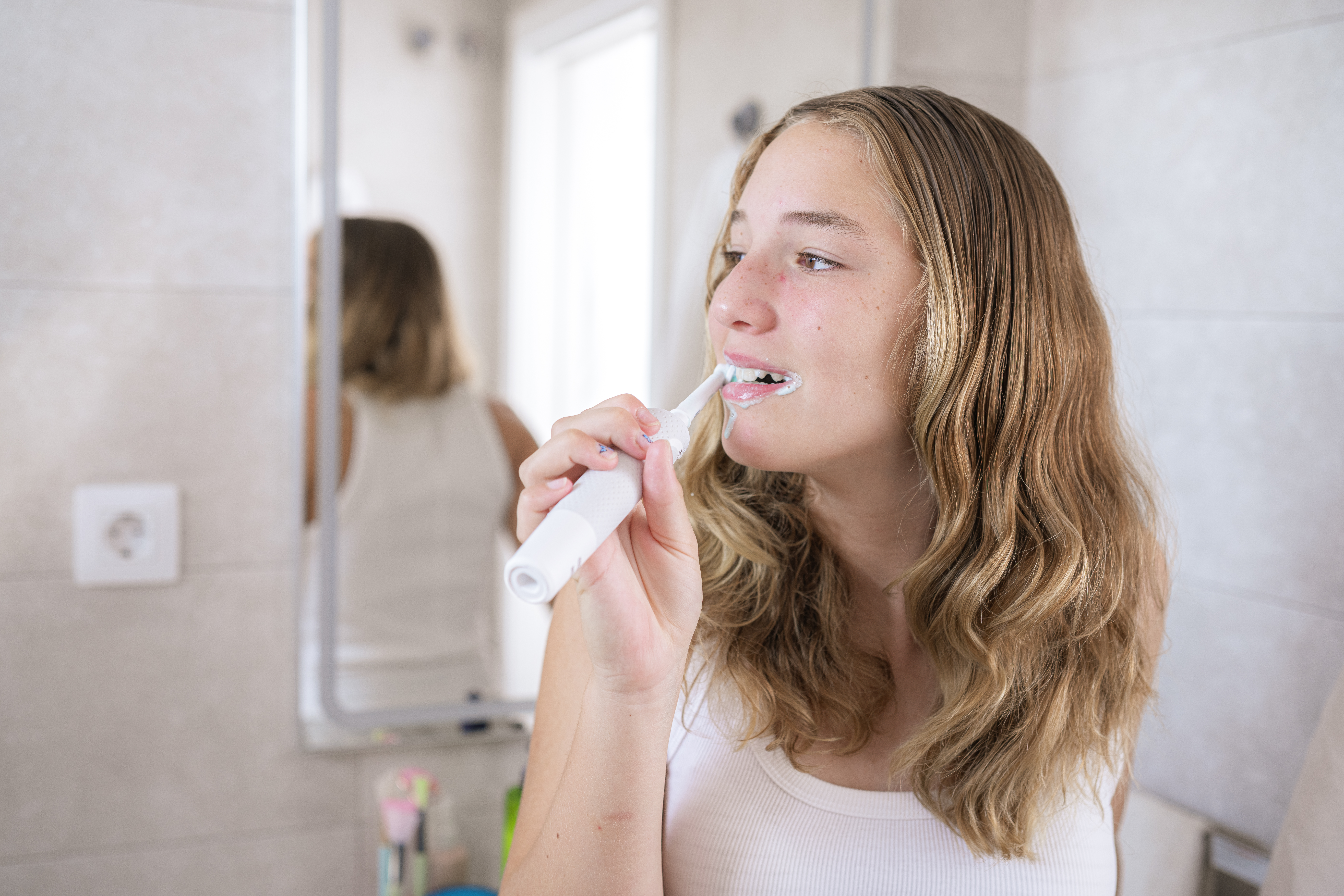
How to brush your teeth with an electric toothbrush
- Squeeze a pea-sized amount of fluoride toothpaste onto your toothbrush head, insuring it has soft bristles.
- Start on the outside surfaces first, moving slowly from tooth to tooth and gently moving up or down the gums and stopping for a few seconds on every tooth.
- Follow the same process on the inside surface.
- Guide the toothbrush over the chewing surfaces, going over each tooth for a few seconds. Spit out the toothpaste, but do not rinse it away.