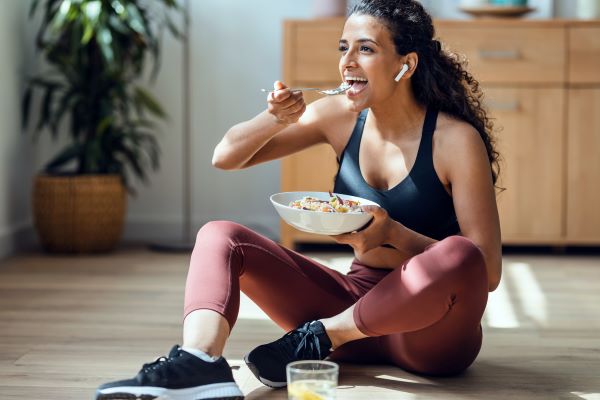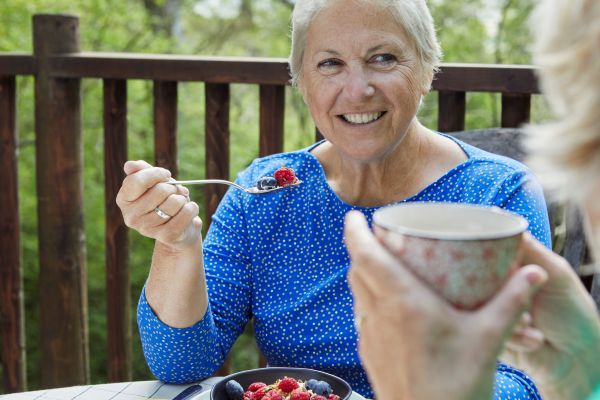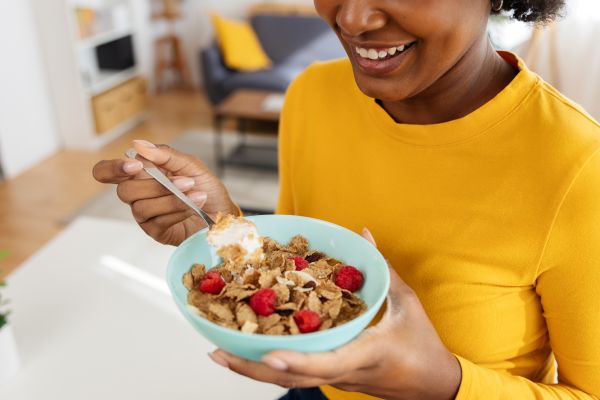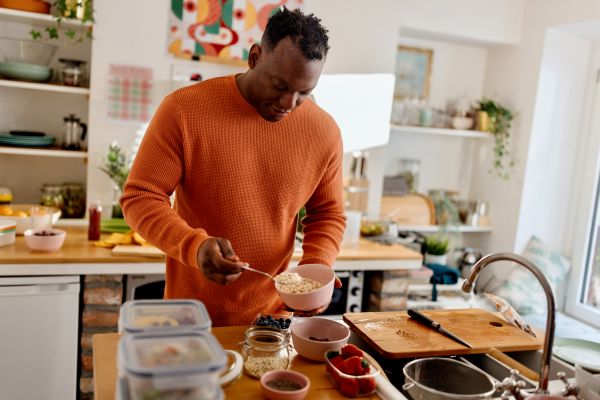
When it comes to managing cholesterol, there’s no single miracle food. “Think of cholesterol fighting foods as a team rather than individual champions,” says Lauren Atkins, Co-Founder and Co-Director of OnCore Nutrition. “No single player wins the match, it’s the combination that makes the difference.”
Her winning line-up includes oats and barley, legumes, nuts, salmon and extra virgin olive oil.
So, what is cholesterol?
Cholesterol often gets painted as the villain, but your body actually needs it. Your liver makes most of it, with a small amount coming from the foods you eat. It plays an important role in helping our bodies build cells, produce hormones, make vitamin D and helps create the bile acids that help you digest fats. The key however, is balance. When certain types of cholesterol get too high, they can build up in your arteries and make it harder for blood to flow.
The two main types of cholesterol
There are two main players:
- Low Density Lipoprotein (LDL), often called 'bad' cholesterol, carries cholesterol around your body. Too much of it can lead to build-up in your arteries.
- High Density Lipoprotein (HDL), often referred to as ‘good’ cholesterol, helps clear excess cholesterol and returns it back to the liver.
Atkins often asks her clients to picture a busy city with rubbish collectors. “LDL is like a delivery truck that occasionally drops litter on the footpath when it is overloaded. HDL is the clean-up crew that follows behind, sweeping litter off the street and back to the depot. You want a well-staffed clean-up crew and carefully loaded delivery trucks.”
What are the risk factors associated with high cholesterol?
Persistently high LDL cholesterol can be a risk factor for certain heart disease. Over time, it can contribute to:
- Heart attack
- Stroke
- Peripheral artery disease (reduced blood flow to the legs and feet)
But cholesterol is just one piece of the puzzle. Your overall cardiovascular risk also depends on things like age, blood pressure, family history and lifestyle, so it’s always looked at as part of the bigger picture.
The tricky part? Most of the time there are no symptoms.
High cholesterol doesn’t usually come with warning signs. That’s why regular check-ups with your GP are so important, you won’t feel it building up.

Medibank Heart Health at Home
Medibank Heart Health at Home is a phone-based cardiac rehabilitation program designed to support you from the comfort of your own home. Clinical and product eligibility criteria apply.
Cholesterol fighting foods
When it comes to managing cholesterol, what’s on your plate can have a real impact. Here are Lauren Atkins’ top suggestions:
- Oats and barley are rich in beta-glucan (a type of soluble fibre) that can help to reduce LDL cholesterol.
- Legumes like lentils, chickpeas, kidney beans and split peas are packed with soluble fibre and plant protein, and have been linked to meaningful reductions in LDL.
- Nuts, especially almonds and walnuts, provide healthy unsaturated fats, fibre and plant compounds that support better cholesterol levels.
- Avocado is a source of monounsaturated fats that can help lower LDL when used in place of saturated fats.
- Fatty fish like salmon, sardines and mackerel are rich in omega-3s, which support overall heart health.
- Extra virgin olive oil is high in monounsaturated fats and backed by strong evidence for cardiovascular benefits.
- Soy-based foods such as tofu, provide protein and plant compounds that may help modestly reduce LDL, especially when they replace higher saturated fat foods.
Can small dietary swaps make a difference to cholesterol?
Absolutely. Focus on replacing saturated fat with unsaturated fat and increasing your soluble fibre intake. Here are a few of Lauren Atkins’ suggested swaps:
- Butter for olive oil when cooking
- Processed meats for legumes, fish or lean protein
- Swap white bread for oat-based, rye-based or grain-bread options with visible seeds or wholegrain texture.
- Biscuits for a handful of nuts
- Refined snacks for hearty soups or grain-based salads.
What about supermarket products that claim to lower cholesterol?
Some supermarket products, including certain margarines and cereals, do have evidence behind them, but there’s a catch. To see a cholesterol-lowering benefit, they generally need to be eaten regularly and in specific amounts, which can be tricky for the average shopper to understand.
Standard margarines are usually lower in saturated fat than butter, making them a reasonable swap, but it’s still worth checking the nutrition panel for ingredients like added salt. For a more whole-food option, avocado on toast is hard to beat, providing healthy fats, fibre and nutrients that support heart health.
What should you go easy on?
Try limiting foods high in saturated and trans fats, including:
- Fatty and processed meats like bacon, salami, sausages and full-fat mince
- Large amounts of full-fat dairy like butter, cream and cheese
- Coconut and palm oils, which are high in saturated fat
- Ultra-processed snacks like pastries, biscuits and fried takeaway foods
- Trans fats (now less common in Australia, but still found in some imported and deep-fried foods).
The thinking has shifted from cutting out ‘bad’ foods to focusing on the bigger picture. “A healthy diet is about the overall pattern, not obsessing over one food,” says Atkins. “There are no ‘bad’ foods, it’s what you do most of the time that counts, not any single meal.”
It’s not just about food.
Lifestyle plays a big role too. Regular movement, not smoking, managing blood sugar and maintaining a healthy weight all support better cholesterol levels.
For some people, medication may also be part of the plan. It’s about finding what works for you with the support of your GP.
The takeaway
If there’s one thing to stick with, it’s this: small, smart swaps add up.
Choose wholegrain breads, cereals, pasta and rice, swap in healthier fats where you can, and bring legumes into your meals a few times a week. These are Atkins’ top three tips, simple, doable, and backed by evidence.
When it comes to managing your cholesterol, it’s not about being perfect, it’s about building small, consistent habits that your body will thank you for over time.