-
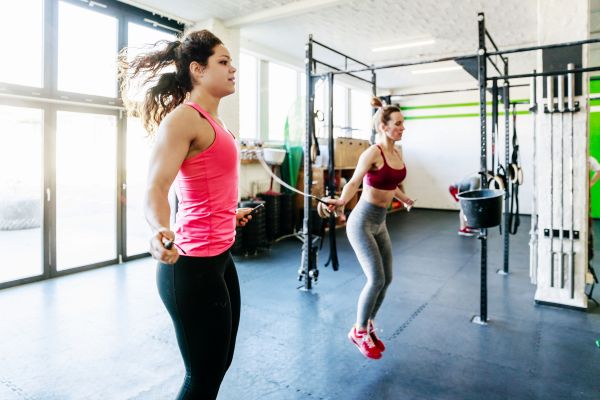
Senior physiotherapist Michael Dermansky likes the simplicity of a skipping rope workout.
“It is an easy, non-expensive way to work on all these aspects of your health at the same time,” says Dermansky.
“It is a great cardiovascular exercise that has multiple benefits for your health, including direct benefits to your heart health, but also helps improves your balance, coordination, hand-eye movement and agility.”
Is skipping good for cardio?
Cardiovascular exercise (cardio) are activities that help your heart and blood vessels. Cardio exercise increases your heart rate, breathing and blood flow. It’s a great way to work up a sweat, too.
Skipping gets a thumbs up from Dermansky for cardio.
“Skipping is a great cardiovascular training exercise, because it quite quickly elevates your heart rate into the moderate-to-vigorous zone required for heart health improvement,” he says.
Health benefits of skipping
Dermansky explains the potential health benefits of picking up a skipping rope.
Cardio training
“…because skipping involves continuous, rhythmic full-body movement, it pushes your heart rate into the moderate-to-vigorous zone faster than many other exercises,” he says. “Sustaining that elevated rate trains the heart to pump more efficiently over time.”
Agility and power
“…because you are required to jump and land repeatedly, this is not just strength training, but true power training, a very important aspect of training for performance,” says Dermansky.
A study1 of university students found that a group who did a ten-minute jump rope training session once per week in combination with other cardio exercises improved their muscular strength and cardio fitness compared to a group who only did cardio exercises and didn’t skip.
Improved coordination
“You are not just jumping up and down, but [you’re] required to coordinate this with the timing of the rope,” says Dermansky.
“This is great training for hand-eye coordination and being able to sustain this level of control for a period of time.”
Skipping can be great for kids’ development, too, improving balance, coordination, and motor skills.
Skipping tips for beginners
Before you step up to the rope for the first time, there’s a few things Dermansky wants you to remember.
- Start small: “Start with short intervals (30 seconds) rather than trying to skip continuously,” he says. “For the first few times, even if this means stepping over the rope rather than jumping, that’s a good start.”
- Try without the rope first: “The other alternative is 30 seconds of double leg hops without the rope, before you bring in the additional step of hand-eye coordination with the rope.”
- Proper set up is key: According to Dermansky, a proper skipping rope, stable surface and supportive shoes are vital. “Use a properly sized rope, standing in the middle, handles should reach armpit height,” he says.
“Skip on a shock-absorbing surface like a sprung floor, mat, or grass, rather than concrete.
“If you don’t have the strength and you begin on a hard surface, it won’t take long for you to develop shin splints from the activity, which will limit your training.
“Wear supportive, cushioned shoes for the same reason [because] you want good shock absorption, to reduce the load on your muscles and bones.”
Safe skipping technique
Skipping requires a jump rope, and like any piece of exercise equipment, it’s best to know the right technique.
“Keep elbows close to the body, turn the rope mainly with the wrists rather than the whole arm,” says Dermansky.
“Land softly on the balls of the feet, keep knees slightly bent to absorb impact, maintain an upright posture and jump just high enough to clear the rope – higher is not better, it just adds unnecessary work and extra strain on your knees and hips.”
It can be tempting to go all-in with a new activity, but Dermansky says it's important to "build up gradually over weeks rather than pushing for long sessions immediately."
And it may seem like an obvious question, but the one Dermansky hears a lot is: how high do you jump?
“Keep jumps low – a few centimetres off the ground is enough,” he says.
Is there anyone who avoid skipping?
Despite the benefits of skipping, it has its drawbacks for some people.
People with joint problems
Skipping can be tough on the joints according to Dermansky.
“If you have significant joint problems (knees, ankles, hips) – make sure you build up your strength first and can tolerate load in these joints before you begin skipping,” he says.
People with pelvic floor dysfunction or prolapse
“If you experience symptoms with these issues, see a women’s health physio first before beginning skipping. [The same goes for] certain pregnancy stages."
READ MORE: How to strengthen your pelvic floor
People with untreated osteoporosis and/or balance disorders
“Although the impact and balance work from skipping can have a positive effect on bone health and balance, this must be introduced gradually and safely with these conditions under the guidance of an allied health professional, such as a physiotherapist or accredited exercise physiologist.”
Always consult your GP or health professional about your specific health concerns.
Here’s some exercises you might want to try instead.
What are alternative exercises to skipping?
Here are Dermansky’s top 5 alternatives to skipping that can still help improve your cardiovascular fitness:
- Stationary cycling
- Swimming
- Rowing machine
- Brisk walking or incline treadmill walking
- Elliptical trainer
READ MORE: The health benenfits of walking
Please check in with a healthcare professional before starting a new exercise program or making a lifestyle change.
Is skipping rope a good workout?

Step it up, get rewarded.
Each step you take could get you closer to a sweet reward from THE ICONIC, adidas and more.
How?
Join Live Better Rewards, Medibank’s health and wellbeing program that rewards you for healthy actions.
Eligible Medibank members with hospital and/or extras cover could earn up to $400 worth of rewards every year from our partners. *^
Frequently asked questions
Is skipping as good as running for cardio?
The answer isn’t as simple as yes or no. Dermansky advises that there’s key differences between the two exercises.
“[Skipping] is great at elevating your heart rate and gets you working at a vigorous level faster than running because of the larger anti-gravity and power component of the activity.
“However, if you want to be a good runner, your body isn’t good at translating being good at one activity (skipping) to being good at another activity (running).
“So, if you want to improve your running ability, you also have to train at running to be good as a runner. Skipping would be a great additional activity to add to your cardio-vascular routine, but this strongly depends on your goal and what you are training for.”
Is skipping good for your pelvic floor?
Dermansky notes that it depends on the condition of your pelvic floor.
“Skipping puts a very heavy load on your pelvic floor,” he says.
“…if you have issues with your pelvic floor already, I would strongly recommend seeing a women’s health physio before commencing skipping as an exercise.”
How many calories does skipping burn?
“5 minutes of skipping is roughly 210 – 335 kilojoules,” Dermansky says.
How long should you skip for?
“Although this varies, start with 5 minutes total, broken into short intervals,” says Dermansky.
“Build up to 10–15 minutes as fitness improves. Many people get strong cardio benefits from short, intense sessions of just 10–15 minutes a few times a week.”
Our expert: Michael Dermansky
Michael Dermansky is the managing director and senior physiotherapist at MD Health.
-
How to choose and fit the right sports bra
Professor Deirdre McGhee’s expert advice on how to find your perfect fit.
-
Why more women are embracing strength training (and why you should too)
Strength training for women has many physical and mental health benefits, from strengthening bones to burning calories. Learn what they are, and how to get started.
-
Yoga and Pilates are for men too
Yoga and Pilates are for men, too. Pilates instructor Anthony Lett shares the health benefits of stretching for men.
-
7 ways walking boosts your health
Walking is a fantastic way to improve your mental and physical health, including your risk of heart disease and type 2 diabetes. Read more about the benefits, and how to get started.
-
Can walking be as good as a run?
Walking has many health benefits but is it as good as running? Read more about the health benefits of walking, how it compares to running, and how to walk properly.
-
How to walk 10,000 steps
How long does it really take to walk 10,000 steps? It may not be as hard as you think!






Things you should know
* Must be 16 years or over to register for Medibank Live Better rewards. Some program partners and earning activities require a person to be at least 18 years of age to be eligible to earn and/or redeem a reward. Must be a Medibank member with hospital cover, extras cover, or hospital and extras cover, be up-to-date with premium payments and have signed up to Medibank Live Better rewards in the My Medibank app to earn Live Better points for eligible purchases and redeem rewards. Excludes Overseas Student Health Cover (OSHC), Ambulance only cover, ahm covers and other selected covers. Live Better Management Pty Ltd, ACN 003 457 289 has entered into commercial arrangements with Medibank Live Better program partners and may receive commissions. Additional terms and conditions may apply to points earning activities and rewards. Points earning activities and rewards are subject to change and may be subject to availability. Wherever possible, we will give you notice of these changes. See full Medibank Live Better rewards terms.
^ Medibank Live Better Challenges & Goals Earning Policy: The participant of a Medibank Live Better Challenge or Goal may not receive Live Better points or may have their already credited Live Better points reversed in accordance with the Medibank Live Better terms and conditions. To earn Live Better points, the participant needs to properly complete 100% of the eligible Challenge according to the instructions. The number of Live Better points available for Medibank Live Better Challenges and Goals is subject to change without prior notice. The maximum number of Live Better points that each Medibank Live Better member can earn from successfully completing health and wellbeing Challenges, Goals or any Onboarding action in a calendar year is 40,000 Live Better points. To the extent of any inconsistency between this Policy and the Medibank Live Better terms and conditions, the terms and conditions will take precedence.
How we reviewed this article
This content was reviewed by a Medibank healthcare professional. Medibank has strict sourcing guidelines and relies on peer-reviewed studies and information from Australian government and health peak bodies.