What to eat after a tooth extraction

After a tooth extraction or wisdom tooth removal your mouth might feel tender, the thought of chewing can be uncomfortable, and you’re not sure which foods are best to eat.
Soft, easy‑to‑chew foods like smoothies, yoghurt, mashed vegetables, soups and scrambled eggs are gentle options that provide nourishment without irritating the wound.
Most people can gradually return to normal foods after one or two weeks but it’s best to avoid crunchy, chewy or hot foods until your mouth has started to heal.
What happens in your mouth after a tooth extraction?
It can help to know what’s happening in your mouth before you decide what to eat following a tooth extraction.
After your tooth is removed, a blood clot forms in the socket. This clot is important for healing, and it’s normal for eating to feel uncomfortable for a few days.
Recovery times can vary depending on the type of extraction, but you can usually expect it will take around two weeks to heal.
“Patients with simple extractions are commonly back to normal eating after five to seven days, or about seven to 10 days for wisdom teeth or complex extractions,” says Dr Ian Hedley, Principal Dentist from The Mosman Dental Surgery.
“Complete healing for the gum to close over takes about two weeks for a simple extraction and up to six weeks for a complex extraction.”
To aid healing and keep the area clean, your dentist may recommend dissolving half a teaspoon of salt in a glass of warm water and holding it briefly in your mouth, then gently spitting it out. You can usually repeat this after meals and before bed for the next few days, or as advised by your dentist.
When can I eat after dental extraction?
The good news is that most patients are able to eat soft foods as soon as the anaesthetic has worn off, usually within a few hours of the extraction.
“It is perfectly acceptable to eat on the same day as your extraction, however soft foods that are easy to chew are recommended,” says Dr Hedley.
Chewing on the other side of the extraction site is advised to avoid the painful area at this time.
What are the best soft foods to eat after tooth extraction?
Dr Hedley says that post-extraction recovery calls for soft foods that aren’t chewy or crunchy.
“Jelly and pudding are OK to have within the first day or two. Just avoid continuing [eating them] long-term [as they are] high sugar foods,” he says.
“Try to stick to more protein-rich foods that will keep you full and are more nourishing to aid in healing.”
It’s also a good idea to avoid foods that are very hot or cold.
Some soft food ideas include:
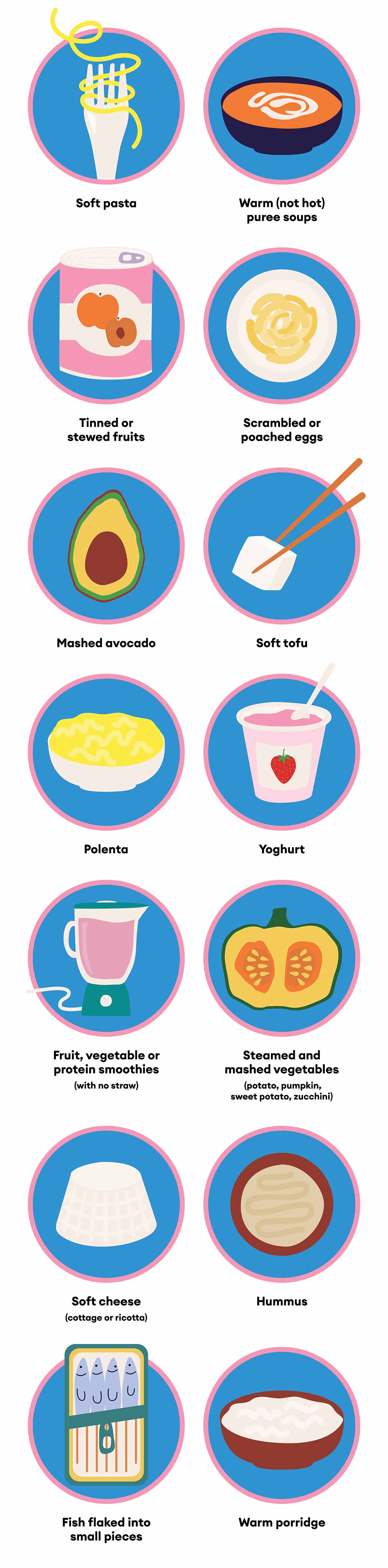
- Yoghurt
- Scrambled/poached eggs
- Warm (not hot) puree soups
- Tinned/stewed fruits
- Steamed and mashed vegetables (potato, pumpkin, sweet potato, zucchini)
- Fruit/vegetable/protein smoothies (with no straw)
- Soft tofu
- Warm porridge
- Mashed avocado
- Hummus
- Fish flaked into small pieces
- Soft pasta
- Polenta
- Soft cheese (cottage/ricotta)
What not to eat after a tooth extraction
- Very hot or cold food and drinks
- Spicy foods
- Fizzy drinks or sugary drinks
- Sticky or chewy foods like chewing gum or toffee
- Hard or crunchy foods
“It is best to avoid foods that are small, hard, or grainy, as they can become lodged in the extraction socket or dislodge the blood clot, potentially delaying healing,” says Dr Hedley. “Foods such as nuts, seeds, rice, popcorn, and crusty bread are best avoided during the initial healing period.”
It’s also important to avoid smoking, vaping and drinking alcohol, especially in the first 24 hours because it can delay healing.
It’s also a good idea not to use a straw after a tooth extraction, as sucking can dislodge the blood clot and lead to dry socket.
READ MORE: Try this recipe for golden root vegetable soup after a tooth extraction.
What is dry socket after tooth extraction?
Dry socket is a painful post-procedural complication after tooth removal, and it affects about one in 20 people. It’s also known as alveolar osteitis.
“Dry sockets occur most commonly in the lower jaw (mandible) and develop when the protective blood clot within the extraction socket is lost or fails to form properly, exposing the underlying bone, says Dr Hedley. “This can result in significant pain and delayed healing.”
Dry socket can start within one to three days after teeth removal and you may feel a throbbing pain that worsens for a few days before getting better. You might also have a slight fever and swelling around the tooth extraction site.
“Patients can play an important role in preventing dry sockets by following their post-operative instructions carefully,” says Dr Hedley.
“This includes avoiding strenuous exercise that may increase blood pressure, refraining from smoking or vaping, avoiding foods that are small, hard, or grainy and may become lodged in the extraction site, and avoiding vigorous rinsing, spitting, or mouthwashing during the first 24 to 48 hours after surgery.”
When can you eat normally after a tooth extraction?
As the area heals and discomfort improves, you can usually start to return to your normal diet within one to two weeks, making sure you stay hydrated during this recovery period.
Contact your dentist promptly if your pain gets worse, swelling increases, bleeding doesn’t settle, or you notice signs of infection.
What are signs your mouth may still be too sensitive for solid foods?
“If your mouth is still sore after an extraction, then best to avoid crunchy, hard or solid foods until it’s more comfortable to eat them,” says Dr Hedley.
Signs to seek advice from a dentist
Some pain, swelling and slight bleeding can be expected after tooth extraction, but symptoms should gradually improve as the area heals. The most common complications after dental surgery are pain, swelling, infection and bleeding.
Contact the dental clinic where you were treated if pain persists or gets worse, swelling doesn’t settle after a day or two, or you have ongoing pain, swelling or a raised temperature, as these may be signs of infection.
READ MORE: Tooth extractions explained

Looking for cover with more bite?
Explore our range of Medibank Extras including dental, from routine check-ups to major treatments.
Frequently asked questions
Can I drink through a straw after tooth extraction?
No, it’s best to avoid using a straw after a tooth extraction. The sucking action can disturb the blood clot in the socket, which may increase the risk of dry socket. Drink from a cup instead.
Can I drink coffee after tooth extraction?
Avoid very hot or cold drinks after your tooth extraction, including hot coffee and tea. Cool or warm coffee is fine.
When can I eat solid food after tooth extraction?
Recovery times vary from patient to patient and it depends on the kind of extraction or dental procedure you’ve had, but most people find they can return to their normal diet in about one to two weeks.
How can I help my mouth heal after a tooth extraction?
From the day after your tooth is removed, you can bathe the area with warm salty water by dissolving half a teaspoon of salt in a glass of lukewarm water and holding it briefly in your mouth, before gently spitting it out. Try this after meals and before bed for at least five days after your extraction, or as advised by your dentist.
When can I smoke after my tooth extraction?
It’s recommended you wait at least 24 hours before you smoke or drink alcohol following a tooth extraction to help the wound heal well and support your recovery.
Our expert: Dr Ian Hedley
Dr Ian Hedley completed his Bachelors of Dental Surgery from the prestigious King’s College London.
As a holistic dentist in Sydney, Ian has a particular set of skills in the management of jaw joint (TMJ) dysfunction,early intervention orthodontic and orthopaedic work in children, headaches and neck pain. He also excels in restorative dentistry and works with master technicians to deliver the best dental care in the country.
-
Everything you need to know about your tooth extraction and recovery
Learn how to prepare for a tooth extraction, what wisdom teeth removal involves, the healing process, pain management and potential complications.
-
Wisdom teeth removal: understanding the options
Find out about hospital and in-the-chair options and how health insurance could help pay towards the costs of wisdom tooth removals.
-
How vaping affects your dental health
Wondering whether vaping is bad news for your dental health? From the short-term effects of vaping to more serious health risks, find out what vaping really means for your teeth and gums.


How we reviewed this article
This content was reviewed by a Medibank healthcare professional. Medibank has strict sourcing guidelines and relies on peer-reviewed studies and information from Australian government and health peak bodies.